Category: week11y

Accessibility themed newsletter released every week.

  • week11y issue 37

    Your weekly frequent11y newsletter, brought to you by @ChrisBAshton:

    How Alexa has change the life of a disabled person

    • Colin Hughes describes how his muscular dystrophy can make it difficult to use remote controls. He now uses Alexa to control thermostats, lights and blinds with his voice. Taking inspiration from a video showing how a garage door can be opened/closed with a cheap wireless switch, Colin retrofitted his front door to be voice-powered for £150. This contrasts with a £5000 quote he received from a company, highlighting the financial burden people with disabilities are put under. His command of ‘open sesame’ has to be regularly changed in case passers by figure out how they can enter his home.

    Accessibility Best Practices for Classes Using Zoom

    • PDF from The University of Texas. Tips include: don’t require people to turn on their webcams (anxiety, physical tics etc); read screen shared contents and any chat content aloud; use Show/Hide Non-video participants to hide names and profile pictures if recording; do not force mute participant audio (required for deaf students to pin the sign language interpreters); post materials before or after class for students to review.

    Accessible Font Sizing, Explained

    • The WCAG does not define a minimum font size for the web: just that fonts should be resizable and of a sufficient contrast. Contrast should be 4.5:1 for small text, 3:1 for larger text (defined as text that is a minimum of 18 point or 14 point with bold), though different screen densities and alphabets mean the pixel size will vary. Browser font sizes are accessible by default, so avoid using px and instead make your font sizes relative to the base font size (usually 16px) using rem/em. About 3% of users change their default font size in the browser settings, and some will override the font-family too (e.g. to OpenDyslexic, which increases readability for users with dyslexia).

    Control your iPhone with your voice (and leave Siri out of it)

    • iOS 13 brings ‘Voice Control’, which allows you to use commands like ‘swipe left’ or ‘scroll up’, open apps or take pictures. You can also dictate text messages or notes, and delete text you’ve typed without having to touch your phone. It’s also highly customisable: you can set up shortcuts for inserting your email rather than saying it out loud, or have Voice Control perform custom gestures, e.g. touch-and-hold. This article explains how to set that all up.

    Disabled Nurses Find Covid-19 Silver Lining; Hope For More Inclusive Future

    • A Forbes article about three nurses with disabilities, and the opportunities the current pandemic has afforded them. Andrea Dalzell interviewed for 76 hospital jobs and was rejected from them all once they realised she was in a wheelchair. The desperate plea for nurses since March has now meant employers look past her disability, and she’s found a job. All three nurses in the article strongly state that they work as effectively as other nurses.
    • On a semi-related note, #DisabledAndCute is trending on Twitter. I came across this image in a New York Times article, showcasing an ‘accessible party dress’ on manikin positioned in a wheelchair, amongst other manikins. It’s not something you usually see and I liked that the visibility of wheelchairs in social/fun settings is being normalised.
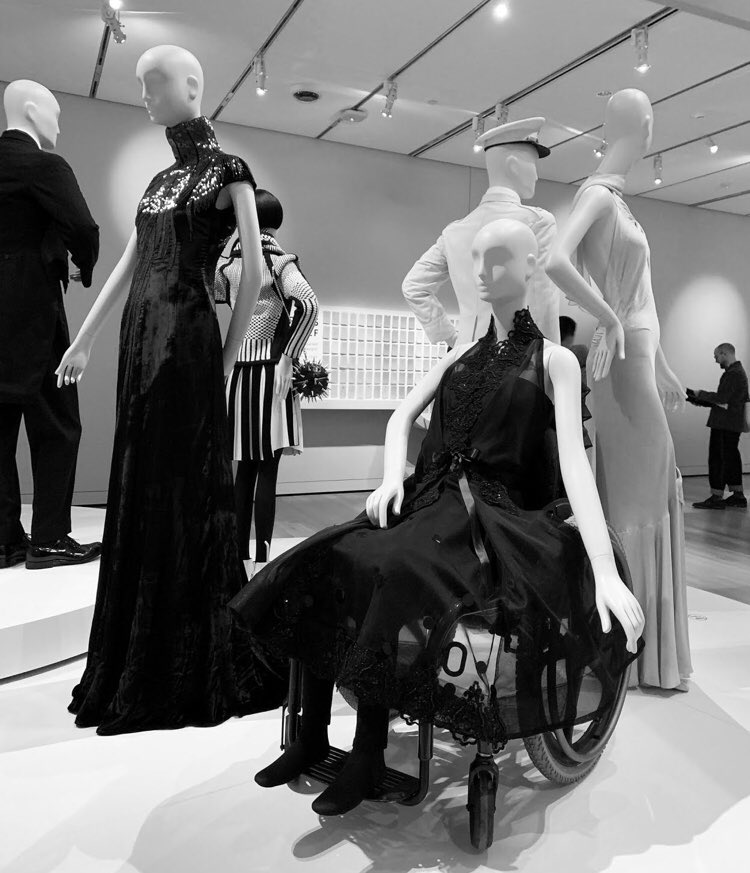
    Fashion and Textiles Collection of the Peabody Essex Museum

    Did you know that you can subscribe to dai11y, week11y, fortnight11y or month11y updates! Every newsletter gets the same content; it is your choice to have short, regular emails or longer, less frequent ones. Curated with ♥ by developer @ChrisBAshton.
  • week11y issue 36

    Your weekly frequent11y newsletter, brought to you by @ChrisBAshton:

    Disney+ Honored by the American Council of the Blind for Their Audio Description Tracks

    • Audio descriptions are added to films in order to recreate the visual experiences happening onscreen. Disney+ has received an Achievement Award in Audio Description from the American Council of the Blind (ACB) for their commitment to adding audio description tracks to original programming. Disney+ has already added audio descriptions to their modern catalogue including The Mandalorian, and is now working through older classics like Cinderella.

    Missouri woman sews accessible masks with vinyl mouth ‘window’

    • An article from May, but on a subject that still dominates. The introduction of mask wearing to reduce coronavirus spread has had a disproportionate impact on the deaf and hard of hearing community, and many of us rely on lip reading more than we know. Demand for Stacie Amschler’s masks has gone as far as Utah, Maryland and Florida, particularly for doctors trying to reach their patients.

    Planning, creating and publishing accessible social media campaigns

    • This guide from the Government Communication Service has great tips, such as testing the readability of your content (aiming for a 9-year old’s reading age), avoiding use of bit.ly links, avoiding baking in text overlays into your video and ensuring voiceovers are at least 20db louder than background music. There are also platform-specific alt text advice for Twitter and LinkedIn.

    Building the Woke Web: Web Accessibility, Inclusion & Social Justice

    • A List Apart article by Olu Niyiawosusi, drawing attention to the 40% of the world’s population that still does not have access to the internet. More locally, only 37% of people living in social housing in the UK are online. This further divides the world, as those shopping in person tend to overpay compared to online, and those without digital skills are three times as likely to be in low-income bands. We must continue to offer non-online options for vital services, and attempt to reduce the barrier to becoming digital by building inclusive, accessible sites.

    Online retail giant Zappos is now selling single shoes to help those with disabilities

    • American shoes and accessories seller Zappos have started allowing customers to purchase single shoes, or shoes in different sizes. The pilot program, which claims to be the first of its kind, allows amputees and people with physical disabilities to purchase exactly what they need.

    Did you know that you can subscribe to dai11y, week11y, fortnight11y or month11y updates! Every newsletter gets the same content; it is your choice to have short, regular emails or longer, less frequent ones. Curated with ♥ by developer @ChrisBAshton.

  • week11y issue 35

    Your weekly frequent11y newsletter, brought to you by @ChrisBAshton:

    We need more inclusive web performance metrics

    • Scott Jehl writes about how popular user metrics such as Largest Contentful Paint are not necessarily useful to everyone. Users relying on screen readers may not be able to read the page until it becomes fully interactive, sometimes long after the DOM is complete. Scott has raised an issue to consider if Lighthouse could measure the time to the accessibility tree being created and/or the time to first accessibility API query, as suggested by Léonie Watson on Twitter.

    Amazing haptic speaker lets visually impaired people read braille in midair

    • Researchers at Bayreuth University, Germany, are working on a speaker system that uses acoustic force and ultrasound to recreate traditional braille writing in midair. The system known as HaptiRead comes at a very poignant time as people are worried about touching surfaces during this coronavirus pandemic. The technology could be built into displays such as ATMs, and is powerful enough to be felt on the user’s hand up to 70cm away. Read more in the academic paper.

    Accessibility Dont’s, Learn From Basic Mistakes in Web Design

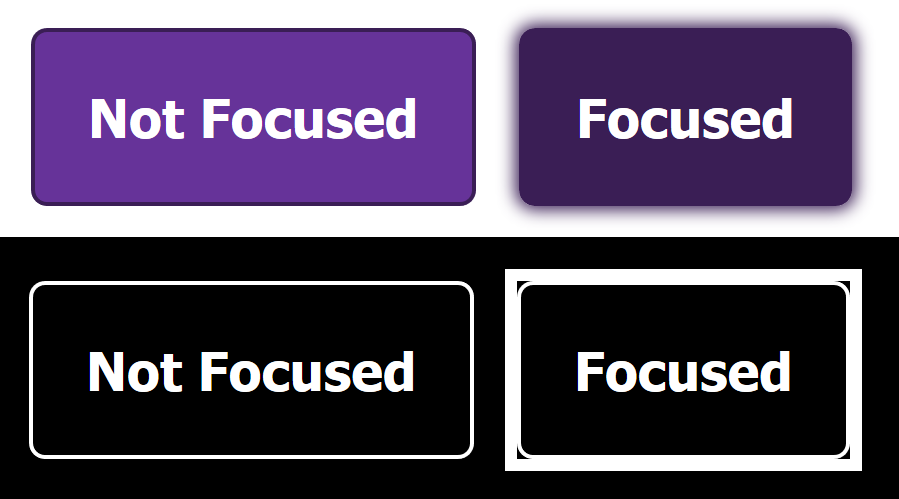
    • Adam Laki shares five common a11y fails to avoid. 1: don’t remove underlines on links. 2: don’t remove outlines on focusable elements. 3: don’t remove textarea resize functionality. 4: don’t open links in new browser windows. 5: don’t use fixed font-size. There are caveats to each tip, so the article is worth reading in full.

    Killer Instinct: How To: Play The Game Blindfolded (video, or article if you’d prefer)

    • An interesting video by SightlessKombat, a blind gamer describing how they rose to the top tier of players by relying on their hearing. By turning up the volume of the ‘heads up display’, they could listen carefully to the pitch changing as each punch forms part of a ‘combo’, informing decisions that help land the most damage. SightlessKombat also talks of the demotivation of not being able to see his opponents’ rankings, nor how many points he would gain from each fight.

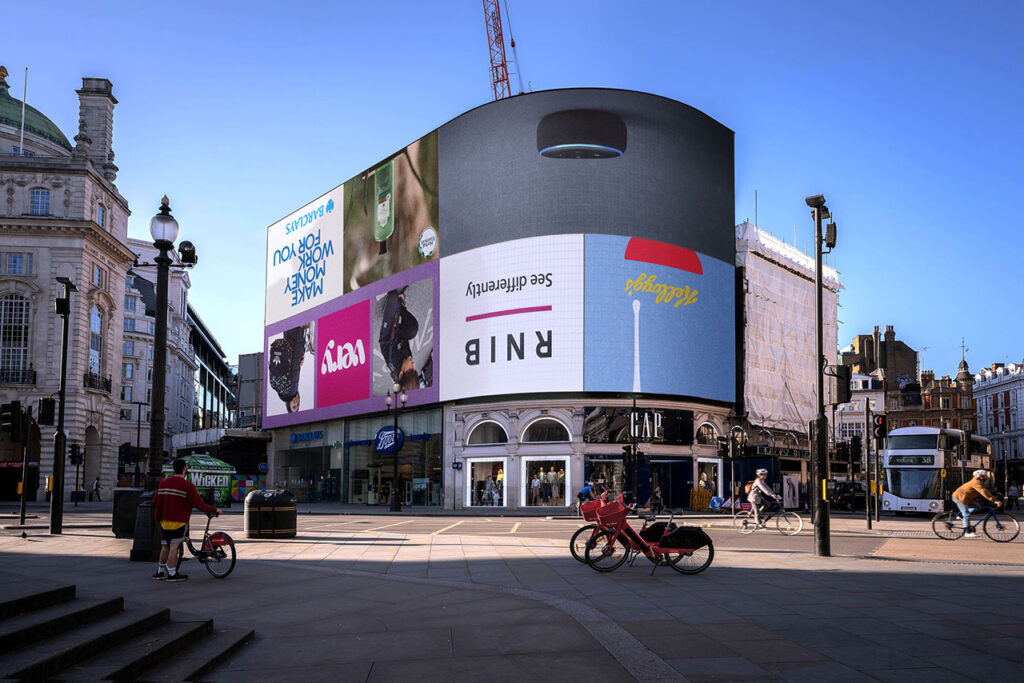
    Piccadilly Lights turned upside down to raise awareness of challenges faced by blind people

    • For the week of the 6th July, London’s infamous advertising billboard at Piccadilly Circus was turned upside down to raise awareness of the challenges raised by social distancing for the blind and partially sighted. RNIB said “the usual methods of navigating around public spaces rely on human contact, guidance and touch, all of which are no longer considered safe”. Adverts appeared 180° rotated, alternating with text “The world has been turned upside down, especially for people with sight loss”.

    Did you know that you can subscribe to dai11y, week11y, fortnight11y or month11y updates! Every newsletter gets the same content; it is your choice to have short, regular emails or longer, less frequent ones. Curated with ♥ by developer @ChrisBAshton.

  • week11y issue 34

    Your weekly frequent11y newsletter, brought to you by @ChrisBAshton:

    A Complete Guide to Links and Buttons

    • An excellent resource by CSS-Tricks. I learned that the download attribute on links instructs the browser to download the resource; that links can have a rel attribute that define the relationship to the target (e.g. rel="author"); that you can chain link styles (a:focus:hover {}); and that if you wrap a lot of content inside a single <a> tag, the entire contents are read to the screen reader before it announces that it is a link (so don’t do it!).

    Meaning without markup: Accessibility Object Model

    • Hidde de Vries writes about the Accessibility Object Model proposal for JavaScript, which allows devs to hook into the accessibility tree (like Service Workers are able to hook into the network). It should make code easier to test, and HTML less verbose, since you would operate on the element directly, e.g. el.ariaExpanded = true. This can make canvas-based applications more accessible too, without having to maintain DOM node equivalents that are only for your screen reader users.

    iOS 14 is filled with accessibility improvements

    Blindness cure in sight

    • Macular degeneration is a common eye disease affecting 200 million people worldwide. It can lead to complete blindness. Scientists are working on a new treatment utilising gene therapy and near-infrared light. Early tests on human retinas show that ‘near-infrared light exposures reactivate the human retina’s visual circuitry’.

    Did you know that you can subscribe to dai11y, week11y, fortnight11y or month11y updates! Every newsletter gets the same content; it is your choice to have short, regular emails or longer, less frequent ones. Curated with ♥ by developer @ChrisBAshton.

  • week11y issue 33

    Your weekly frequent11y newsletter, brought to you by @ChrisBAshton:

    Enhancing ARIA landmarks with aria-labelledby

    • Article by Léonie Watson describing how to use aria-labelledby to distinguish between multiple navigational elements. Example: <nav role="navigation" aria-labelledby="firstLabel"><p>Choose an <span id="firstLabel">aisle</span> to browse</p><ul><li><a href="fresh.html">Fresh foods</a></li>...</ul>.

    How Does HTML Microdata Help With Accessibility?

    • Scott Vinkle explains how pages marked up with microdata helps the ‘Reader Mode’ in browsers to find and arrange content. For example, <img src="source.jpg" alt="" itemprop="image" /> determines the image that will be displayed in Reader Mode. Reader Mode is a useful feature for many, especially for people with dyslexia, as it removes distractions such as navigation, animations and ads.

    #accessiBe Will Get You Sued

    • Adrian Roselli writes about accessiBe, a company (whose article I’ve shared before) that offers an add-on for sites to automatically make them ‘accessible’. Adrian presents a scathing review of their practices, including that they incorrectly interpret WCAG, are cited in accessibility lawsuits and attempt to spoof automated checkers.

    The Latest Barbie Dreamhouse Now Includes A Wheelchair-Accessible Elevator

    • Mattel, the manufacturer behind the Barbie brand, started producing Barbies with wheelchairs in February 2019. They’ve now released a ‘Dreamhouse’ dollhouse that has a button-operated lift, big enough to accommodate the wheelchair. It’s a great step forward in seeing a full range of diversity from a young age.

    An app for everything, but can everyone use it?

    • Anne Spencer Ross tested almost 9000 apps and found that a quarter were missing labels for >90% of their icons. ‘Floating action buttons’, representing the most important action on the screen, lacked labels in 92% of cases. The tools used to build apps can greatly affect their accessibility: 100% of screen elements coming from Unity and 53% of screen elements from Cocos2dx were completely unusable. And Education apps made up 7% of apps overall but 19% of completely unusable apps.

    Did you know that you can subscribe to dai11y, week11y, fortnight11y or month11y updates! Every newsletter gets the same content; it is your choice to have short, regular emails or longer, less frequent ones. Curated with ♥ by developer @ChrisBAshton.

  • week11y issue 32

    Your weekly frequent11y newsletter, brought to you by @ChrisBAshton:

    The troubled state of screen readers in multilingual situations

    • Xurxe Toivo García shares their findings when testing different screen reader / browser / OS combinations with a simple English web page featuring a <span> with a different lang to the main page. All were inconsistent and none worked perfectly. On VoiceOver for desktop, paragraph text would be read with a Finnish voice (wrong) during continuous reading, and with an English voice (right) when using the keyboard to move the reading pointer. VoiceOver mobile ignored any language declarations.

    How Web Accessibility Works

    • Segun Ola gives a brief but useful overview of how browsers generate an Accessibility Object Model (AOM) in addition to the DOM/CSSOM, and how this AOM interfaces between the browser and the assistive technology used by the user. He distinguishes between native primitives (e.g. checkbox) and more complicated widgets (such as autocomplete) which require ARIA markup.

    How Eastenders’ Ben Mitchell is setting new standards for deaf representation

    • Eastenders‘ Ben Mitchell character was deaf in one ear but has now lost hearing in his other after a dramatic boating accident, and has to learn how to adapt. Interesting stats: 12 million people in the UK are deaf or live with hearing loss. Every day, 5 children are born deaf, and another 5 will become deaf by adulthood. Only 1 in 10 deaf children use sign language (most children considered ‘deaf’ do have access to some sound), and most attend a local school rather than a deaf school.

    Inheritance Tax: The Real Cost of not Making Content Accessible

    • Simon Mellins, Ebook Technology Coordinator at Penguin, writes a condensed version of a talk he gave at the London Book Fair, where he described the accessibility case for creating good tags, metadata and logically structuring e-books. Here, he concentrates more on the legacy it leaves; the semantic richness that enables the curation and adoption of content into hitherto unknown reading systems. Simon argues that failing to add these features now is merely delaying the cost to a later date.
    If overriding focus styles, use *:focus { outline: 3px solid transparent } to support Windows High Contrast Mode

    Quick Tips for High Contrast Mode

    • Sarah Higley shares some tips for supporting Windows High Contrast Mode (WHCM). WHCM ignores ARIA roles/states/properties, so <a role="button"> will be styled as a link. Use svg { fill: currentColor } to have it match the color of the surrounding text. Beware that the -ms-high-contrast media query is being retired in favour of forced-colors, which is still experimental; current advice is to avoid using media queries at all.

    Did you know that you can subscribe to dai11y, week11y, fortnight11y or month11y updates! Every newsletter gets the same content; it is your choice to have short, regular emails or longer, less frequent ones. Curated with ♥ by developer @ChrisBAshton.

  • week11y issue 31

    Your weekly frequent11y newsletter, brought to you by @ChrisBAshton:

    Legacy Applications and Accessibility

    • A deque.com blog post describing approaches to finding accessibility issues in legacy code; for example, scanning the codebase for positive tab index values (tabindex="1" etc). An interesting idea is an ‘accessibility JavaScript file’ that you can include on pages to help fix a11y issues without having to modify the legacy code. For example, var contButton = document.getElementById('continue'); if (contButton) { contButton.setAttribute('role', 'button'); // etc }.

    Modesto Teen Who’s Legally Blind, Hearing Impaired Becomes Household Name In World Of Bowling

    • Jacob Gaddam is a sixteen year old who bowls like a champion – despite being legally blind and hearing impaired. Watch the video on YouTube (I had trouble getting any video content in the article itself).

    My Accessibility-Tinged WWDC 2020 Wishlist

    • The Apple Worldwide Developers Conference is running from June 22-26 this year. Steven Aquino shares his hopes for what Apple will showcase, including the ability to zoom in on emoji; brightness slider for the Apple Watch display; and a Magic Keyboard with Touch Bar.

    For Mothers Of Black Children With Disabilities, Living With Twice The Fear

    • Kim Kaiser voices the fears she has for her black, autistic 14 year old son. “When an African American person is disabled and can’t process a police command, [the result could be fatal]”. She’s taught her son to to keep his hands out of his pockets, to not carry anything that could be perceived as a weapon, and to put his hands up if approached by police. If questioned by police, he is to immediately inform them that he is on the autism spectrum. The sad reality is that his characteristics “automatically look suspicious to first responders”.

    Volunteer scheme that tackles loneliness amongst young disabled people thrives online during pandemic

    • The Sense Buddying scheme matches volunteers and young people with disabilities to spend time together to help combat loneliness, something experienced by 77% of this demographic. Prior to the pandemic, matches did activities in local communities in East London, but now video-chat instead. One testimonial from Saihan Islam reads: “Maria is someone that I can talk to outside of my family which is really nice when I am feeling anxious. She is always really kind and helpful”. You can volunteer by emailing Buddying@sense.org.uk.

    Did you know that you can subscribe to dai11y, week11y, fortnight11y or month11y updates! Every newsletter gets the same content; it is your choice to have short, regular emails or longer, less frequent ones. Curated with ♥ by developer @ChrisBAshton.

  • week11y issue 30

    Your weekly frequent11y newsletter, brought to you by @ChrisBAshton:

    I Don’t Care What Google or Apple or Whoever Did

    • Adrian Roselli complains that when he raises accessibility/usability issues with clients, their response is “but Google does this”. He then lists several poor UI changes the big companies have made and subsequently U-turned on, such as Google’s form fields without boxes, or Apple’s super thin typefaces in iOS. Heydon Pickering wrote a similar article in January. Both alluded to the fact that you wouldn’t want to replicate these companies’ designs anyway: why make your product look and feel like Google’s?

    The Last of Us Part II: Accessibility features detailed

    • A comprehensive article on the PlayStation blog, detailing how The Last of Us Part II comes with three presets for different kinds of disabilities, but every setting can be individually overwritten. Gameplay alterations such as ‘invisible while prone’ allow gamers to enjoy stealth mode they might otherwise not be able to. Directional arrows accompanying subtitles show deaf gamers where the speech is coming from. Every command, including touchpad swipes and controller shake, can be remapped to different controller inputs.

    Deaf fitness instructor calls for more accessibility in workout classes

    • India Morse (@youleanmeup) is a fitness instructor on Instagram. She was born deaf, and found that workout classes aren’t visual enough for the deaf community, and Instagram as a platform is lacking live-captions. So she launched Coaching by India; an online coaching app with captions and an interpreter voicing India’s signs, so that is accessible to everyone.

    Did you know that you can subscribe to dai11y, week11y, fortnight11y or month11y updates! Every newsletter gets the same content; it is your choice to have short, regular emails or longer, less frequent ones. Curated with ♥ by developer @ChrisBAshton.

  • week11y issue 29

    After a week on holiday (as best as possible in the lockdown!), I have a bumper issue for you this week!

    Sa11y – accessibility quality assurance assistant

    • An accessibility quality assurance tool geared towards content authors: Sa11y visually highlights common errors, with contextual information. Try out the demo.

    Text link Accessibilty: aria-label and title

    • Deque article testing <a> links with various combinations of title and aria-label. The conclusion is that aria-label is the best supported attribute, and links to the ARIA8 WCAG technique which sites good use cases such as: <a aria-label="Read more about Seminole tax hike">Read more...</a>.

    Twitter announces change to default alt text setting

    • Via TwitterA11y: starting May 27th, you no longer need a setting to add alt text to your images on Twitter. Prior to this, it was an exclusively opt-in feature.

    Could coronavirus kickstart more accessible tech?

    • In this BBC video, we discover how live captioning enables deaf colleagues to participate in remote meetings in this era of coronavirus. It references an article on bighack.org comparing the best video conferencing software for accessibility, which found that some popular platforms such as Zoom do not provide live captioning.

    HTMHell special: close buttons

    • Article by HTMHell picking apart the real-world implementations of the ‘close’ button. Some sites use images or SVGs with no alt text, some use ‘X’ to represent ‘close’ (which is lost on screen readers), some use <div> or <a> elements where a <button> is required. There are a few recommended solutions depending on the visual style you’re going for.

    Is it ok to ‘grey out’ disabled buttons?

    • UX Collective article that makes some interesting points: WCAG 2.1 success criterion 1.4.3 (“Contrast”) does not apply to text that is “part of an inactive user interface component”. However, if providing low-contrast styles for disabled buttons, the author encourages measures such as ensuring colour is not the only affordance, reducing opacity of the primary button colour when disabled rather than opting for grey, adding supporting text, and applying aria-disabled="true" to disabled buttons to support all screen readers.

    Your weekly frequent11y newsletter, brought to you by @ChrisBAshton:

    Did you know that you can subscribe to dai11y, week11y, fortnight11y or month11y updates! Every newsletter gets the same content; it is your choice to have short, regular emails or longer, less frequent ones. Curated with ♥ by developer @ChrisBAshton.

  • week11y issue 28

    Your weekly frequent11y newsletter, brought to you by @ChrisBAshton:

    Building an accessible autocomplete control

    • Adam Silver explains in detail how to build an accessible autocomplete component, taking into account the noJS experience, announcing results to screen readers, hiding suggestions ‘on blur’, keyboard support and endonym/typo support. It’s always surprising just how complicated autocompletes can be, and this is a really good example of one done right.

    Screen readers and cookie consents

    • In this video from the London Web Performance Group this month, Léonie Watson demonstrates that by using headings to navigate with a screen reader, she never encounters the GDPR cookie notice on a lot of websites. And if she does, it’s often difficult to figure out what she’s consenting to. A good example of an accessible cookie notice is on the Atlassian website.

    Rail stations across Great Britain receive £20 million funding boost for accessibility improvements

    • 124 stations in Great Britain will gain new lifts, accessible toilets and/or improved customer information screens. A list of affected stations appears at the bottom of the page.

    Employers Don’t Understand the Work People with Disabilities Can Do, SHRM Research Finds

    • The USA is struggling to fill millions of jobs, but people with disabilities are often overlooked. 51-61% of HR professionals and managers have had no disability inclusion training, and 13-32% of managers say they’d feel uncomfortable working with colleagues with disabilities. However, 92% of managers (and 97% of HR professionals) who have employees who have a disability said those individuals perform the same or better than their peers.

    Less than 1% of Brazilian sites are fully accessible, research points out

    • A survey of 14.65 million active Brazilian websites found just 0.74% passed all accessibility tests. On this scale, it’s unclear how the sites were tested, though the article makes reference to checking images, links and validation fields. By the same criteria, this is still a 20% improvement on the previous survey from September 2019, in which 5.60% of sites failed all tests, compared to just 0.01% this year.

    Did you know that you can subscribe to dai11y, week11y, fortnight11y or month11y updates! Every newsletter gets the same content; it is your choice to have short, regular emails or longer, less frequent ones. Curated with ♥ by developer @ChrisBAshton.